Lacheism, Loss, and The Last of Us: Part II
This is a blog post from my archive. Originally written July 7, 2024.
Lying on the floor, desperately trying to breathe, but the only thing entering your lungs is a dry dust of exasperation. Like the room was drained of all oxygen, turned into a vacuum in an instant. Blood runs down your cheek. Your nose, broken, but the epinephrine coursing through your tightened veins hides the sting of a busted nose. A faceless woman takes the edge of a club to the only family you’ve ever had. A cold, mucus-filled sigh escapes their mouth. They lie dead on the floor. Your mind swirls. You should have made up with them sooner, you should have invited them to see that movie earlier, you should have forgiven them faster. You should have saved them. Now you won’t be able to. No matter how immense your emotions, how angry or sad you get, nothing will bring them back to life. It’s like fighting with your loved one as they leave the house, just to get the call from a coroner at the scene of a crash. You feel robbed, vindictive, vengeful, angry, pathetic, and sad all at the same time. And you never even got to say goodbye.
After traveling halfway across the country with someone, after depending on each other to survive, after weathering tragedy after tragedy together, and after making the tragic penultimate choice in the last moments of Part I, it’s clear gamers were not ready to lose the hulking father-figure of the pair of leading characters in The Last of Us, and especially so early on in the game’s runtime. Few games have been as universally acclaimed by critics, journalists, and industry pundits, yet received seemingly equally universal hatred, disdain, and dislike by the series’ fans. Sure, The Last of Us: Part II is not a perfect game. It suffers from an exceedingly mostly unnecessarily long runtime compared to the original, it suffers from poor pacing, and most of all, it suffers from the lasting hot-topic discourse emerging from its crushing pre-release leak and divisive release. But it by no means deserves the 0’s and 1’s littering its Metacritic user score. The reaction to the game’s story events displays a complete schism in how many critics view games and how some of the industry’s audience does.
Before diving in, I think it’s essential to set a marker here for what critiques this blog post rebukes. A lot, and I mean a lot, of the hatred of this game stems from its LGBTQ+ themes. When Episode 3 of HBO’s The Last of Us adaption aired, it was review bombed on essentially every single user-review platform available for the crime of depicting a non-cishet couple. With 90 percent of all the negative reviews boiling down to “gross gay propaganda! unsubscribed!” Part II received much of the same review bombing. It features a lesbian lead character (and focuses on it much more than the original) and includes a trans-masc secondary character. The initial release of Part I included references to a gay couple with Bill and Frank, references Ellie possibly not being totally straight, and eventually shows us that directly in the Left Behind DLC. But Part I was released in 2013. Acceptance of LGBTQ+ relationships was much rarer than today, but ironically so too was utterly open, congratulated, and hailed contempt, hatred, and hostility for these kinds of relationships, too. The kinds of people leaving these reviews wouldn’t have been swayed no matter the game’s content, so long as they include the slightest hint of standards not adhering to 1960s society. But a whole other crowd of gamers were not happily and candidly homophobic in their hatred of the game. Some of these negative reviews were actually fair criticism. But, with discourse so wide-reaching and with opinions so vast as to the release of Part II, it’s likely many of the reviews were from users-turned-critics of whom did not play the game. Or, started the game but didn’t give it a chance past the par-3 game played on Joel’s skull. However, it is undoubtful that a few, if not many, of the people who hated Part II did indeed play it, and finished it. Yet still immensely disliked it. And I think that it comes down to what Part II asks of the person playing it.
Video games can be challenging. Hell, there are multiple genres of games predicated on being as hard as possible on a mechanics and systems level. But much more seldom does a game become hard emotionally. It is extremely difficult to complete Part II, but not because of the resource scarcity, the stealth gameplay, or the zombie-cultist-militia-fueled action. It’s just hard to digest as a piece of entertainment, period. Never before has a game made me feel the exact emotions of a character--like I was a part of them, until I saw Ellie held to the ground, screaming, unable to even comprehend her own emotions in real-time. As Ellie screamed and kicked and begged for Abby to stop, my own throat went dry. My skin pale. My chest burning. In that moment I had felt utterly robbed. Joel was gone too soon. Too soon for Ellie--Too soon for me. For hours I just sat there, playing the game, emotionless except for the pit of nothingness I felt inside me. Only awakening once I had reached the record-store serenade between Ellie and Dina. Awakening to sob, feeling oh-so helpless knowing that I wouldn’t get another real moment with Joel. It should have made me hate the game. I should have gotten up and slammed down my controller, screamed out my window, thrown a brick at my TV. But for a moment I was paralyzed. It felt like I had just seen the death of a real father figure of mine. Like I had been the one slammed on that floor in the Baldwin mansion. It was like I felt the character, not just felt for them. And after another 15 hours of gameplay, heartbreak, and unfeigned emotion, seeing Ellie alone in her house, barely able to even play the guitar, I finally understood what Part II was trying to achieve. It was likely Druckmann knew what kind of hate the game would receive. Kill off a character as beloved as Joel and so early on in a game’s runtime, and it was bound to happen. But Naughty Dog set their sights higher than just making a good game. They set their sights on making a work of art.
I feel like a lot of people were angry because this was just not something they were interested in. Part I is a great game, it’s emotional, but it’s not physically draining to play. Part I will make you cry, sure, but it won’t make you feel like you lost a real part of you. But I think that’s part of what makes me love Part II as much as I do. It made me feel a way I’ve only felt during real tragedy. Never before has a game made me feel so much emotion at one single time. And I loved it.
That brings us to today’s excerpt. “Lachesism - n. the desire to be struck by disaster—to survive a plane crash, to lose everything in a fire, to plunge over a waterfall—which would put a kink in the smooth arc of your life, and forge it into something hardened and flexible and sharp, not just a stiff prefabricated beam that barely covers the gap between one end of your life and the other.” It’s a word penned in The Dictionary of Obscure Sorrows by John Koenig. And it’s a term that has stuck with me since I first read it. I think it perfectly explains my love for Part II. Naughty Dog was able to craft an experience that can’t really be replicated in normal everyday life. Even though playing Part II can feel miserable. It’s a type of misery you just don’t experience very often. It’s a rare emotion. It’s not just sad or mad, it’s a level of emotion eclipsing every knowable term in the dictionary. And despite how awful it feels, I absolutely adore it.
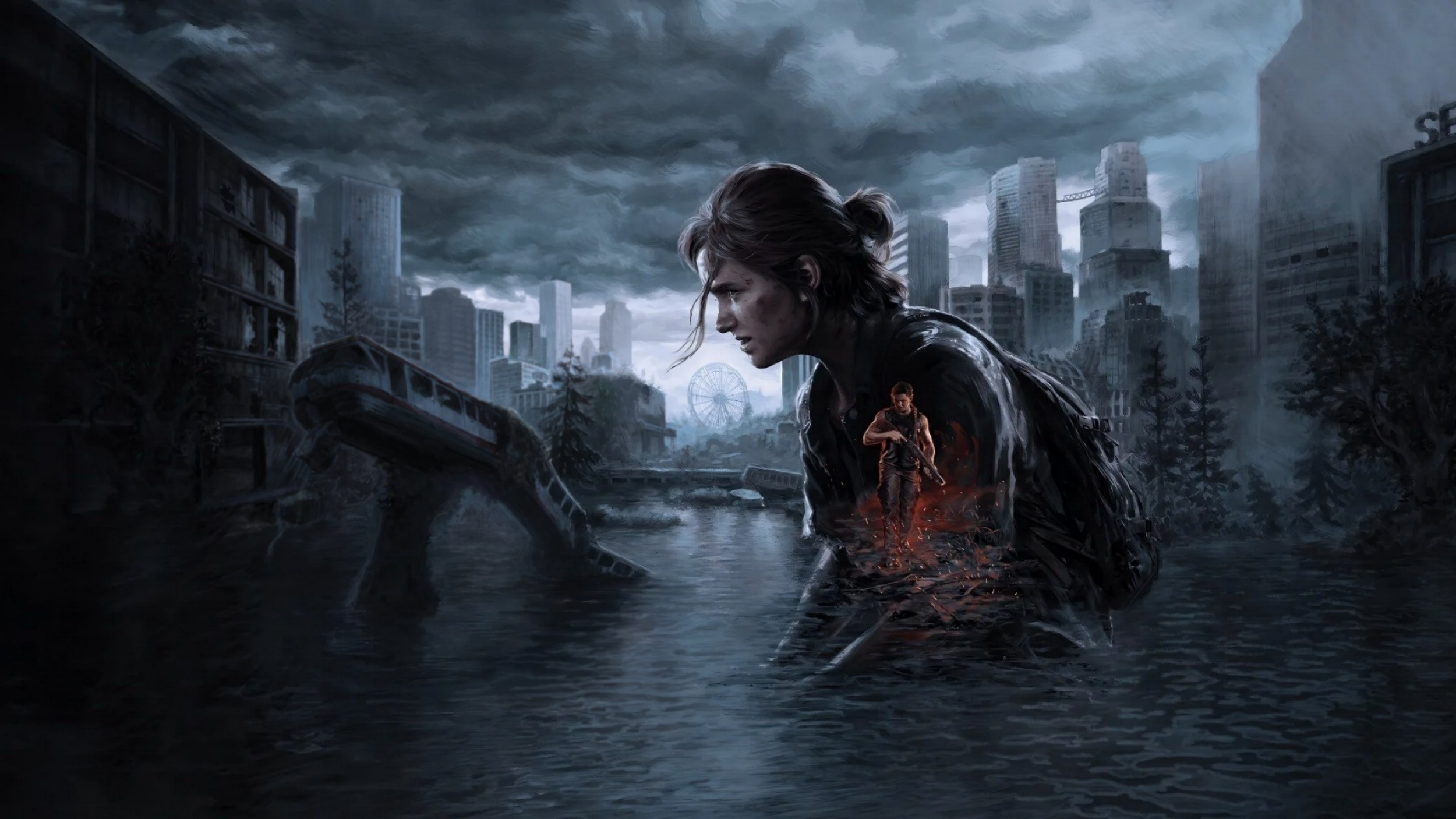
The Last of Us Part II
Five years after their dangerous journey across the post-pandemic United States, Ellie and Joel have settled down in Jackson, Wyoming. Living amongst a thriving community of survivors has allowed them peace and stability, despite the constant threat of the infected and other, more desperate survivors. When a violent event disrupts that peace, Ellie embarks on a relentless journey to carry out justice and find closure. As she hunts those responsible one by one, she is confronted with the devastating physical and emotional repercussions of her actions.